



IN THIS STORY
RTX 5090 connector reached 91.7°CAverage power draw also increased with DLSS 5Per-pin current remained within specification during the normal testWhy does DLSS 5 demand more from the GPU?What the test means for RTX 5090 owners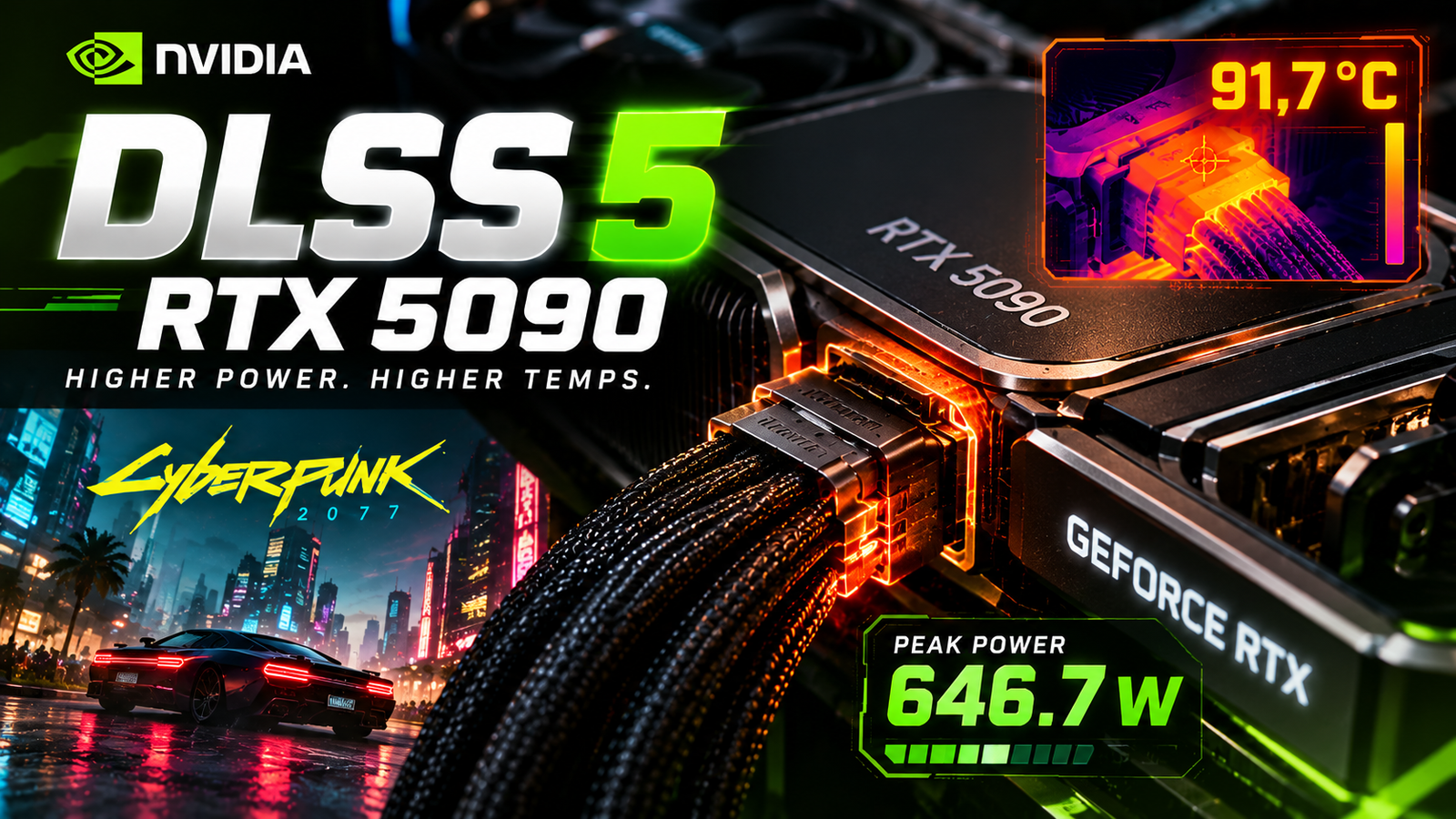
A new independent test is putting the power demands of DLSS 5 under the spotlight. In Cyberpunk 2077, a GeForce RTX 5090 Founders Edition reached 91.7°C at one measured point on its 16-pin power connector with NVIDIA's technology enabled.
The figures come from testing performed by South Korean publication QuasarZone and reported by Tom's Hardware. Alongside connector temperature, the measurements found notable increases in both average and peak RTX 5090 power consumption.
It is important, however, to separate the measured result from a broader conclusion: this was a specific test under controlled conditions, and the data alone does not establish that enabling DLSS 5 will cause failures or damage across RTX 5090 cards.
RTX 5090 connector reached 91.7°C
QuasarZone ran Cyberpunk 2077 for 20 minutes at 4K resolution using the Ultra preset and DLSS Quality, with ambient temperature around 27.5°C. The test included an RTX 5090 Founders Edition, ASUS ROG Astral RTX 5090 and RTX 5080 Founders Edition.
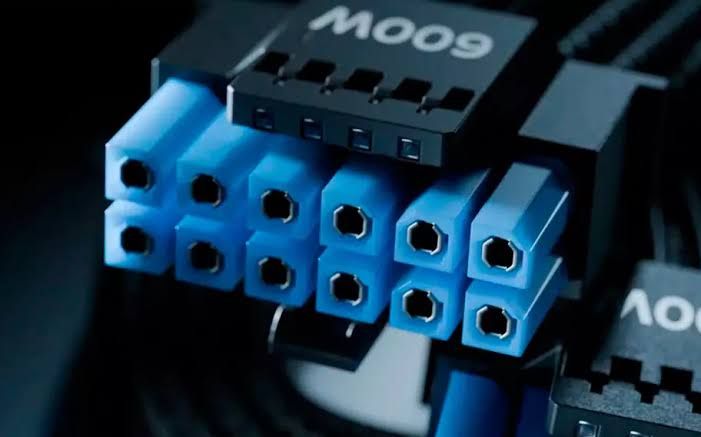
On the RTX 5090 Founders Edition, the latch side of the 16-pin connector rose from 77.1°C with DLSS 5 disabled to 83.4°C with it enabled. On the opposite side, the measurement increased from 80.9°C to 91.7°C.
GPU core temperatures increased as well but remained below the hottest measured point on the connector. Average core temperature rose from 79.4°C to 83°C, while peak temperature moved from 82.3°C to 86.3°C.
Average power draw also increased with DLSS 5
HWiNFO telemetry showed the RTX 5090 moving from an average of 509.2W without DLSS 5 to 575.1W with the technology enabled, an increase of roughly 13%.
The RTX 5080 Founders Edition also consumed more power in the same testing, rising from 298.2W to 350.3W on average.
External PCAT measurements recorded still higher figures for the RTX 5090. Total average GPU power increased from 527.3W to 593.9W, while peak consumption rose from 582.5W to 658W.
Looking specifically at the 16-pin power input, the test recorded a 582.7W average and a 646.7W peak with DLSS 5 enabled. That peak figure is the number attracting attention around the test and should not be confused with sustained average consumption.
Per-pin current remained within specification during the normal test
QuasarZone also measured the six individual power pins using an ASUS ROG Astral RTX 5090 configured with a 575W power limit.
Without DLSS 5, readings ranged from 6.94A to 7.47A per pin. With DLSS 5 enabled, they increased to between 7.83A and 8.51A.
According to the reported data, all of those measurements remained below the cited 9.2A specification per pin, although the available headroom became smaller under the additional load.
The publication also simulated a problematic connection in which one pin stopped conducting. In that simulated condition — not during normal operation with all contacts functioning — the calculated maximum load reached 10.1A with DLSS 5.
Why does DLSS 5 demand more from the GPU?
DLSS 5 represents a significant change from previous generations of the technology. NVIDIA describes it as a 3D-guided neural rendering stage that uses the game engine's rendered frame as its foundation before adding enhanced lighting and material detail.

According to NVIDIA, processing runs locally on GeForce RTX 50 Series GPUs and uses information including frame color and motion vectors, while developers receive controls designed to preserve scene structure, character identity and artistic intent.
That additional workload helps explain why recent testing has found increased power consumption when the feature is enabled, although behavior can vary by game, GPU, configuration, implementation and power limit.
What the test means for RTX 5090 owners
The results do not mean every RTX 5090 using DLSS 5 will reach 91.7°C at the connector or experience problems. They do show that neural-rendering workloads can substantially increase power demand under certain conditions.
For RTX 5090 owners, the figures reinforce existing best practices for high-power GPUs: make sure the power connector is fully seated, avoid excessive cable strain close to the plug, and use an appropriate power supply and cabling for the graphics card.
The findings also raise a broader question for the evolution of DLSS 5. As neural rendering takes on a larger role in the graphics pipeline, visual performance is no longer the only variable worth watching — power consumption, thermals and electrical behavior are becoming increasingly important parts of the conversation.
Sources
- Tom's Hardware — Nvidia DLSS 5 power draw hits 647W as power connector runs hotter than the GPU die
- VideoCardz — RTX 5090 12V-2x6 connector reaches 91.7°C with DLSS 5, 16-pin input peaks at 647W
- NVIDIA Developer — What's New for Game Developers: DLSS 5 with 3D-Guided Neural Rendering
- NVIDIA Newsroom — NVIDIA DLSS 5 Delivers AI-Powered Breakthrough in Visual Fidelity for Games