


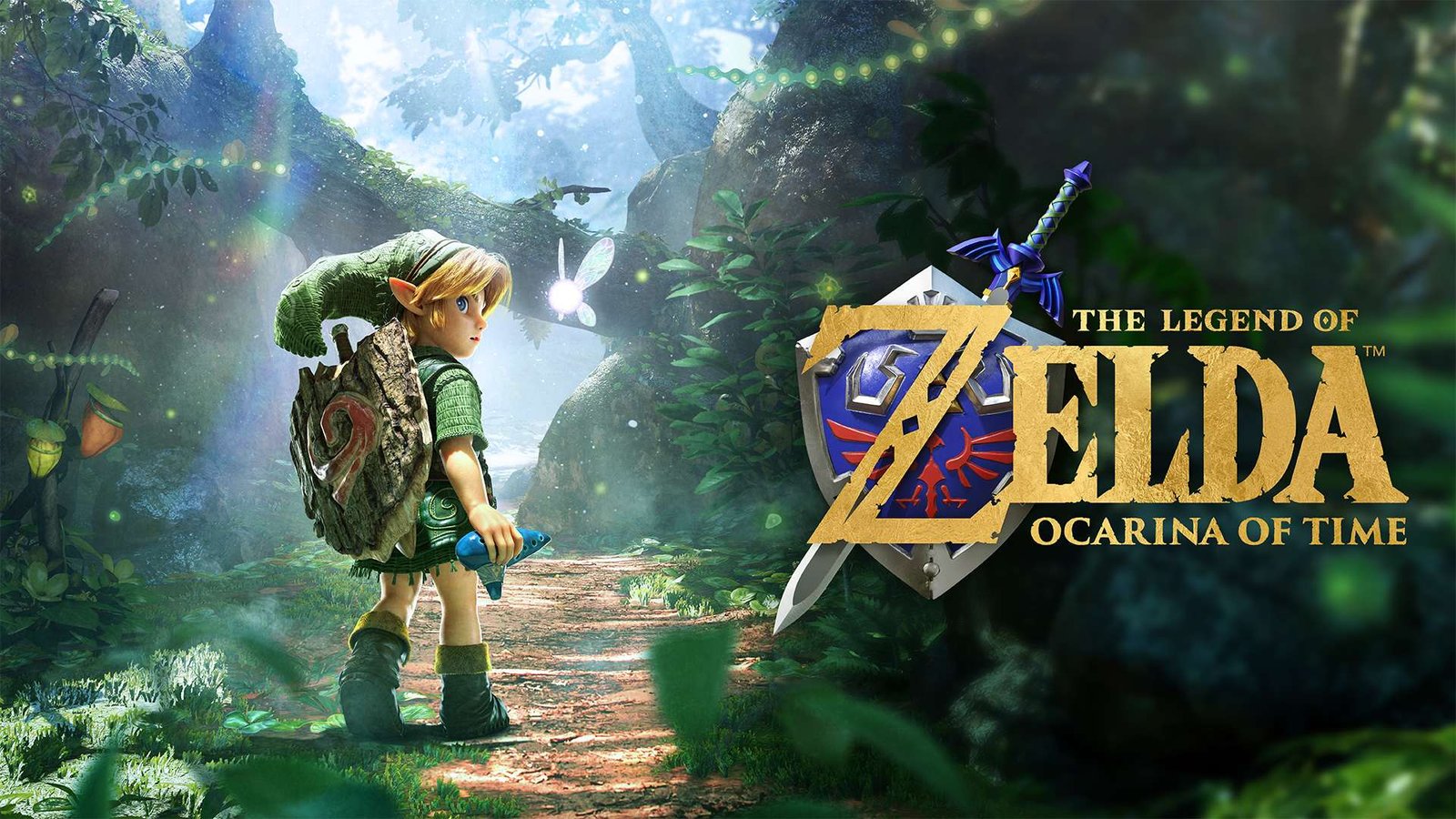
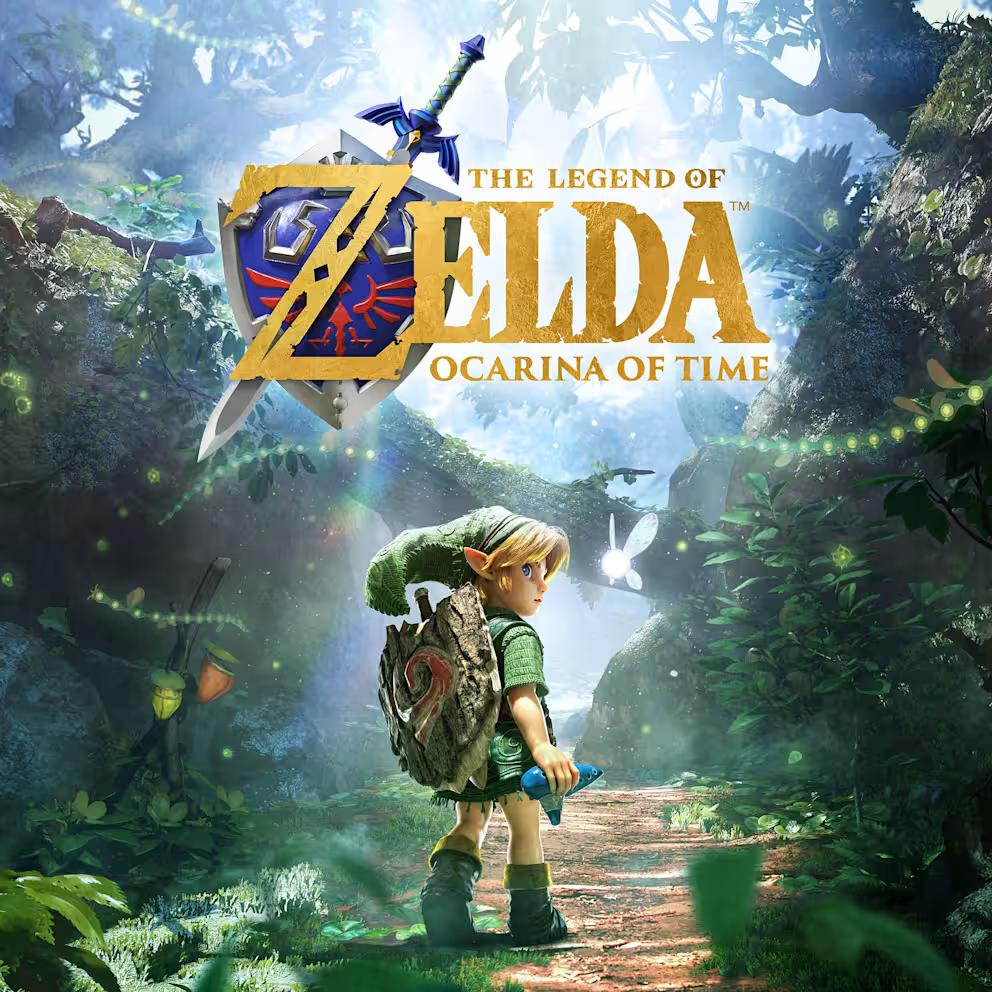
Few games carry the weight of Ocarina of Time. Released on the Nintendo 64 in 1998, it taught a whole generation how to move through a 3D world, how to lock on to an enemy and how to get happily lost in Hyrule. Almost thirty years later, Nintendo has rebuilt that adventure from the ground up for Nintendo Switch 2.
The new The Legend of Zelda: Ocarina of Time arrives on November 5, 2026, anchors the series' 40th anniversary and was shown in detail during the September 8 Nintendo Direct hosted by producer Eiji Aonuma. Here is everything Nintendo has confirmed so far: price, what changes from the original, the new controls, voice acting, the extras and whether it is worth it for newcomers and for players who have already finished the classic.
Quick facts
- Release date: November 5, 2026
- Platform: Nintendo Switch 2 exclusive
- Price: $59.99 digital in the US
- File size: about 27 GB, according to Nintendo's estimate
- Players: 1, in TV, tabletop and handheld modes
- Headline features: rebuilt visuals, voiced cutscenes, orchestral score, jump and dash, free camera and an ocarina you can play through the microphone
Release date and price
The game launches on November 5, 2026, exclusively on Nintendo Switch 2. Pre-orders are open on the Nintendo eShop, where the digital edition is listed at $59.99 in the United States.
A physical edition is also up for pre-order, including a limited run with a textured foil cover that has sold out quickly at several retailers. If you want a boxed copy, keep an eye out for restocks, because demand is high.
One week earlier, on October 29, Nintendo releases The Legend of Zelda 40th Anniversary Edition of the Nintendo Switch 2. More on that below.
Remake or remaster? What Nintendo actually made
It is a remake, and an ambitious one. Nintendo describes it as a faithful interpretation of the original built with modern technology. In practice, the map, the dungeons and the structure of the adventure are the same as in 1998, but almost everything you see, hear and control has been rebuilt.
This is not the Nintendo 64 game at a higher resolution. Environments have been remodeled, textures redone material by material, characters have new lines and cutscenes are now voiced. At the same time, anyone who knows the classic will recognize every corner of Hyrule, because Nintendo kept the world's design intact.
What changes from the Nintendo 64 original
| Nintendo 64 (1998) | Nintendo Switch 2 (2026) | |
|---|---|---|
| Visuals | Simple polygons and fog to hide the horizon | Remodeled environments, new textures, HDR and VRR |
| Cutscenes | Text-only dialogue | Voiced cutscenes and expanded dialogue |
| Music | Nintendo 64 sound chip | Symphonic orchestral score |
| Movement | Automatic jump at ledges | Jump button and dash |
| Camera | Fixed behind Link, centered with Z | Free camera on the right stick |
| Ocarina | Notes on the C buttons | Buttons or humming into the console microphone |
| Progress | No objective log | Threads of Time shows the story and your next step |
Comparison based on what Nintendo showed in the September 8 Direct and on the official product page.
Visuals and sound: a rebuilt Hyrule and an orchestral score
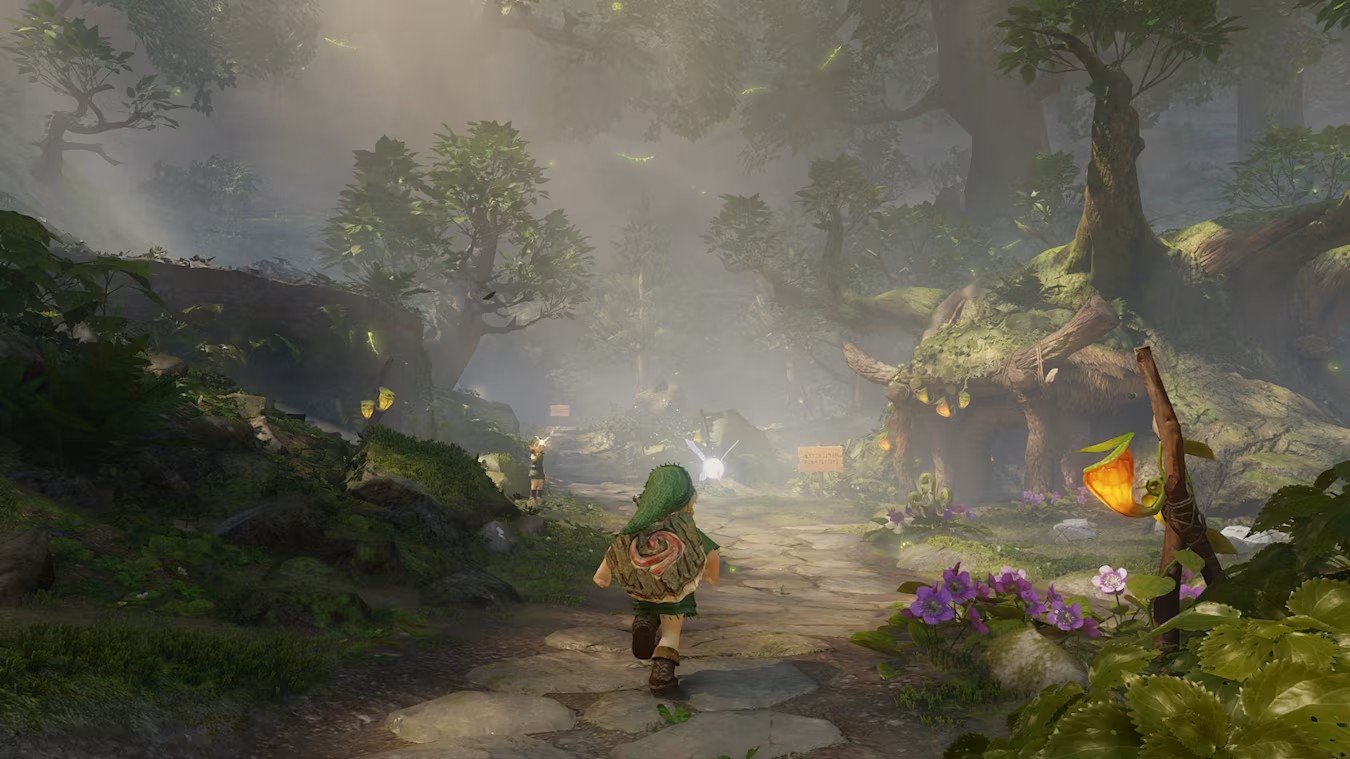
The visual leap is the first thing you notice. Environments have been rebuilt with far more detail, the fog that hid the Nintendo 64 horizon has given way to open vistas, and the modern camera lets you look at places that used to sit outside the frame. The game also supports HDR output and VRR on compatible TVs.
The music got the same care. Koji Kondo's compositions, some of the most recognizable in gaming history, have been recorded as a symphonic score. Nintendo also says the overall sound has been refreshed and loading is faster.
Voice acting: the characters finally speak
This is the change that surprised fans the most. Cutscenes in the new Ocarina of Time are voiced, and Nintendo has expanded the dialogue of the characters Link meets so their personalities come through more clearly.
One caveat: what is confirmed is voice acting in cutscenes, not necessarily in every single conversation. Nintendo has not announced the voice cast yet, and from everything shown so far, Link stays silent, as he does across the series.
Controls: jump, dash and a free camera
This is the change that will reshape how the game plays. In the original, Link jumped automatically when he reached a ledge. Now there is a dedicated jump button you can use at any time, plus a dash to cross Hyrule faster.
The camera has been freed too. Instead of relying on the recenter button, you steer the view with the right stick, like in any modern action game. If you tried to revisit the original and bounced off the controls, this is probably the best news in the whole remake.
There are smaller touches as well, like the day and night cycle, which now keeps running even when Link is inside towns. On the Nintendo 64, time stood still in those places.
Threads of Time: no more getting lost
Anyone who played Ocarina of Time back then knows how easy it was to put it down for a week and come back with no idea what to do next. The remake fixes that with Threads of Time, a menu that shows where you are in the story and what your next objective is.
As you progress, a large tapestry fills in with the moments of your journey. It is built for players who play in short sessions, and it does not change the structure of the adventure: you still explore and work out the paths yourself.
Playing the ocarina by humming into the microphone
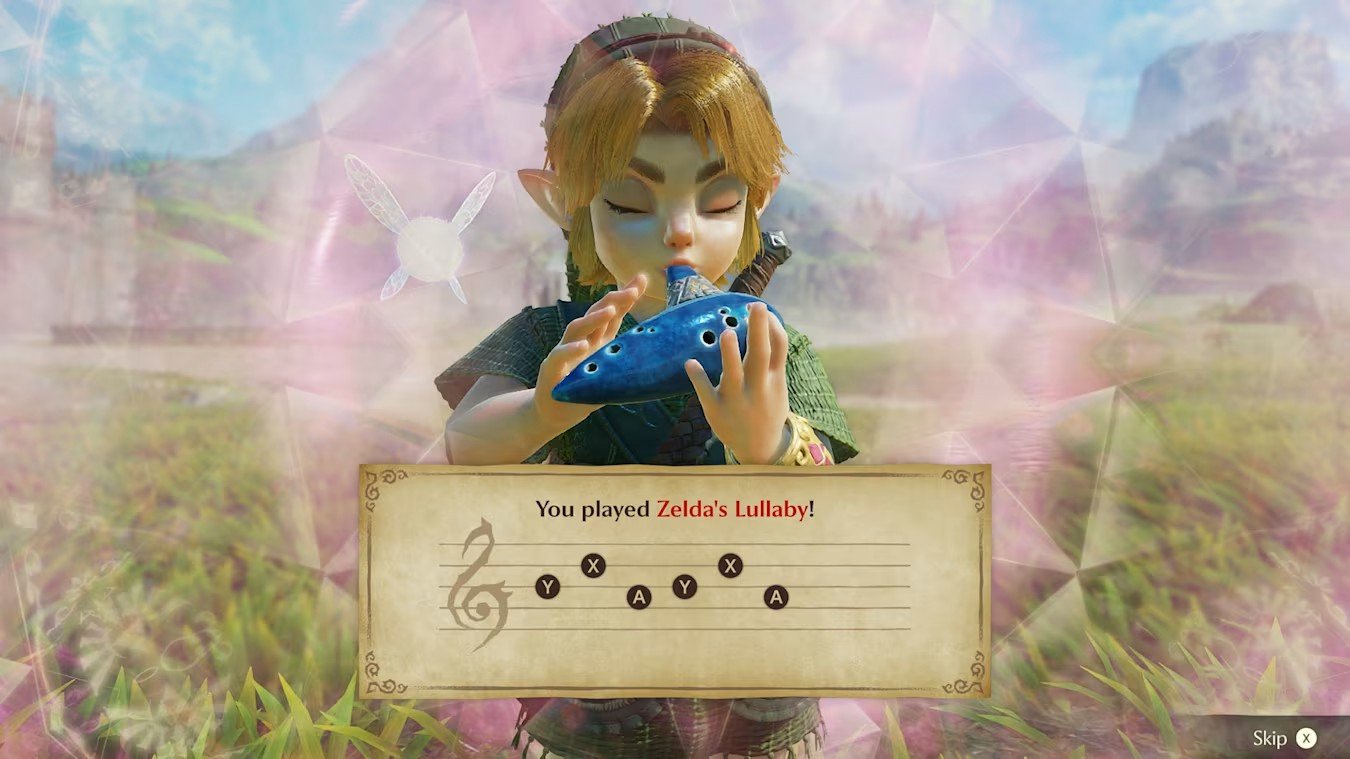
This is the most unusual addition. Nintendo Switch 2 has a built-in microphone, and the game uses it: once Link learns a melody, you can hum the song near the console and Link will play it on the ocarina in the game. You can still use the buttons if you prefer.
In the Direct, Nintendo also showed that Link's fingers move differently for each note, a small detail that shows how much care went into the instrument that gives the game its name.
ZELDA NOTES, amiibo and extras
The game connects to ZELDA NOTES, a service inside the Nintendo Switch App for smartphones. According to Nintendo, it includes a daily record of your accomplishments, a challenge that asks you to find in the game the spot shown in an image on your phone, a virtual ocarina on the phone's touchscreen and a quiz with more than 2,000 questions about Ocarina of Time. All of it is optional.
Existing Zelda series amiibo work with the game and unlock extras. In 2027, Nintendo will release new Young Link and Young Zelda amiibo that unlock masks in the style of the Nintendo 64 visuals.
For collectors, Nintendo also announced playable physical ocarinas, a traditional one and an electronic one, as part of the 40th anniversary celebration.
The Legend of Zelda 40th Anniversary Edition Nintendo Switch 2
The special edition console launches on October 29 with green Joy-Con 2 controllers and a black-and-gold dock bearing the Triforce. The line also includes a Pro Controller and a carrying case in the same style. The game is not bundled, since it releases a week later, and Nintendo has not yet announced the price.
Does the story change?
Not so far. Nintendo presents the game as the same 1998 adventure rebuilt, not as a new story. Ganondorf is still after the Triforce, Link still travels through time to become the Hero of Time, and the dungeons are the same.
What changes is how the story is told: expanded dialogue and voiced cutscenes give the characters more room. Treat any rumor about major plot changes as speculation until Nintendo says otherwise.
Is it worth it?
If you have never played it, the new Ocarina of Time is probably the best way into this classic that has ever existed. Nintendo is betting on exactly that: modern controls, a free camera and Threads of Time remove the very barriers that kept new players away from the original.
If you have already finished it, the appeal is different. This is a chance to see Hyrule the way it always looked in your memory, with an orchestral score and characters that speak. And if you miss the old feel, the Nintendo 64 original is still available on Nintendo Switch Online + Expansion Pack, so you can compare both side by side.
Our take
Remakes of classics usually fail in one of two ways: they change too much and lose what made the original special, or they change too little and end up as a prettier copy. From what Nintendo has shown, Ocarina of Time is taking the harder road, keeping the world's design intact and modernizing everything around it.
The jump button, the free camera and Threads of Time solve the real problems of playing the original in 2026. Voice acting is the riskiest bet, because it changes how fans have imagined these characters for almost three decades. We will find out on November 5, and Players Realm will keep this guide updated as Nintendo reveals more.
FAQ
When does Ocarina of Time launch on Switch 2? November 5, 2026.
How much does it cost? $59.99 for the digital edition in the US. Physical pricing varies by retailer.
Is it on the original Switch? No. The game is a Nintendo Switch 2 exclusive.
Is it a remake or a remaster? A remake. Visuals, sound, controls and dialogue have been rebuilt, while the map and dungeons follow the original.
How big is the download? About 27 GB according to Nintendo's estimate, which may change before launch.
Does the Zelda 40th Anniversary Switch 2 include the game? No. The console edition launches on October 29 and the game is sold separately.