


IN THIS STORY
What does a VPN do while you're gaming?Does a VPN lower ping?So why would a gamer use a VPN?Does NordVPN make sense for gaming?What about PlayStation, Xbox and Nintendo Switch?Can a VPN protect against DDoS attacks?What about gaming on public Wi-Fi?How much does a VPN like NordVPN cost?When is a gaming VPN worth using?Is a gaming VPN worth it?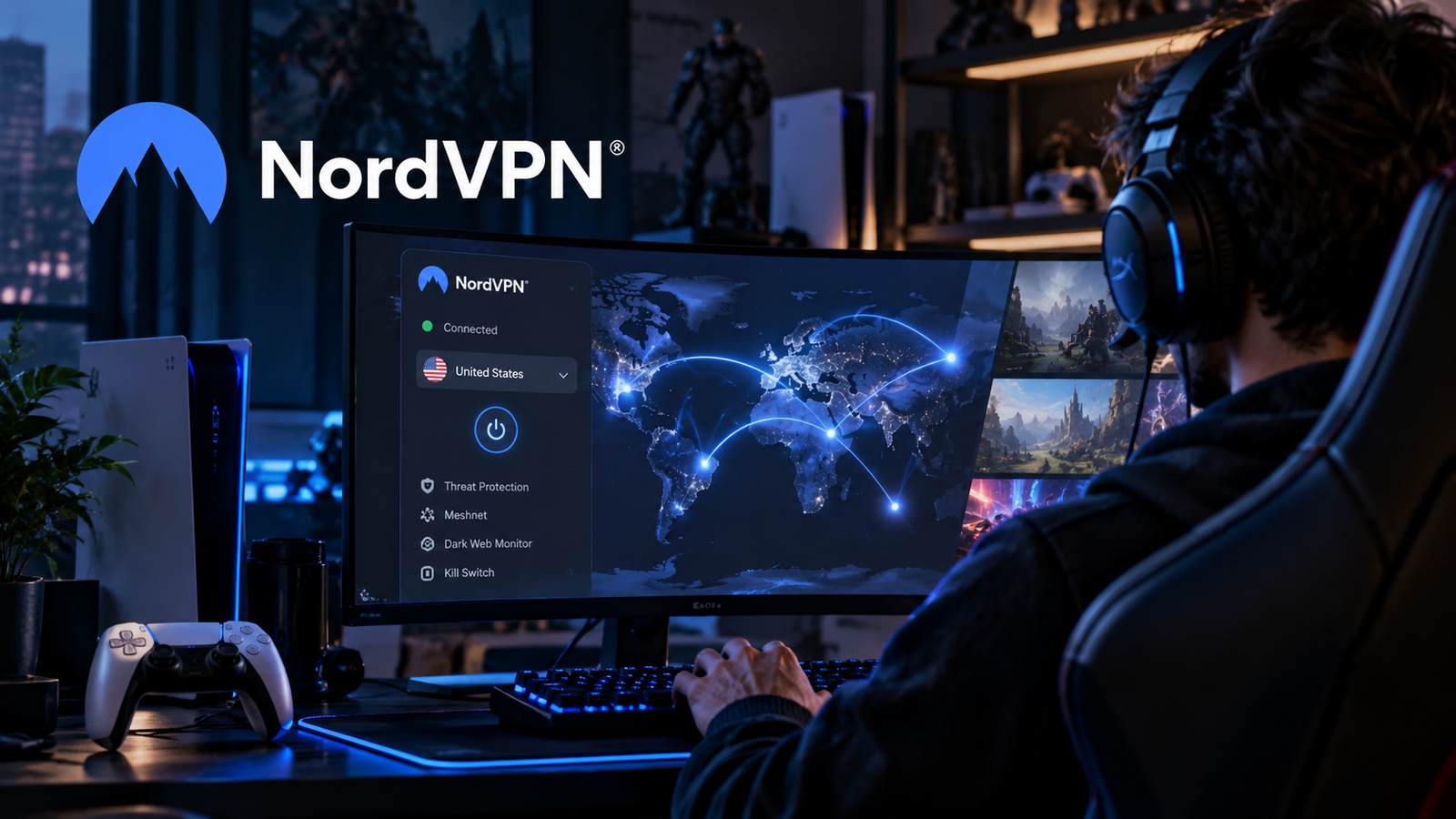
Gaming VPNs are often marketed with a tempting promise: less lag, better security and even a faster connection. The reality is more complicated than simply installing a VPN and expecting your ping to drop.
For some players, a VPN can be genuinely useful. For others, it adds another step to the connection and may increase latency. The key is understanding the problem you are trying to solve.
This article contains affiliate links. Players Realm may earn a commission if you purchase a service through them, at no additional cost to you. This does not affect our editorial analysis.
What does a VPN do while you're gaming?
When you activate a VPN, your internet traffic travels through a VPN server before reaching its destination. The connection between your device and that server is encrypted, while external services see the VPN server's IP address instead of your original public IP.
For gaming, this is primarily relevant to privacy and IP protection. A VPN can also change the network route your data takes to reach a game's servers.
Does a VPN lower ping?
Not necessarily.
In a typical connection, adding a VPN server introduces another step between you and the game server. Depending on the location and quality of that route, latency may remain similar or increase.
There is an important exception. If your ISP normally uses an inefficient route to a particular game server, a VPN may provide a different and more efficient path. In that specific situation, ping can improve.
That is why a VPN should not be treated as a universal solution for lag. Results depend on your ISP, location, VPN server, game and network infrastructure.
So why would a gamer use a VPN?
The most consistent benefit is not turning a slow connection into a fast one. It is adding another layer of privacy and security to your connection.
When using a VPN, protected traffic reaches the internet through the VPN server, reducing direct exposure of the player's public IP address to destinations reached through the tunnel.
That can be useful for people who play online, use networks they do not control or simply want additional protection on the same machine used for games, browsers, Discord and other services.
Does NordVPN make sense for gaming?
NordVPN provides applications for major desktop and mobile operating systems and supports protocols designed to balance security and performance, including NordLynx.
For PC gamers, using the service is relatively straightforward: the application can run directly on the gaming computer and a server can be selected before starting a session.
The service can also make sense for players who want a VPN for activities beyond gaming, including everyday browsing and using Wi-Fi networks away from home.
What about PlayStation, Xbox and Nintendo Switch?
Consoles differ from PCs in one important way: you generally cannot simply install a VPN application directly on the system as you would on Windows.
One option is configuring the VPN on a compatible router. Depending on the device and setup, a protected connection can also be shared through another device.

Anyone considering a VPN primarily for console gaming should therefore account for the additional setup before subscribing.
Can a VPN protect against DDoS attacks?
A VPN can reduce direct exposure of your public IP address by routing the connection through the VPN server's IP. This can be useful in scenarios where an attack depends on discovering a player's public IP.
That does not make a player or network invulnerable. Security depends on multiple factors, and issues affecting a game's infrastructure or servers cannot be fixed simply by enabling a VPN.
What about gaming on public Wi-Fi?
This is a scenario where the security function of a VPN becomes particularly relevant. Traffic between your device and the VPN server is encrypted, adding protection when using networks you do not control, such as hotel, airport or coffee shop Wi-Fi.
For players who travel with a gaming laptop, that benefit may be more important than any potential change in ping.
How much does a VPN like NordVPN cost?
NordVPN offers different subscription periods and feature tiers. Because promotional prices, discounts and conditions can change, Players Realm does not lock a temporary promotion into this guide.
Before subscribing, check the current offer for the subscription period, included features, renewal conditions and refund policy.
When is a gaming VPN worth using?
A VPN makes the most sense when you want to protect your IP, add privacy to your connection, use public networks more securely or test an alternative route when you are experiencing a specific routing problem.
It makes less sense if your only expectation is an automatic reduction in ping. For latency problems, first test Ethernet, Wi-Fi quality, background downloads, the selected game server region and the quality of your internet connection.
Is a gaming VPN worth it?
For the right player, yes — but not for the exaggerated reasons sometimes used in advertising.
A gaming VPN should primarily be viewed as a networking, privacy and security tool. In certain situations it may also produce a more favorable route to a game server, but lower ping should never be treated as guaranteed.
For PC gamers who also want a VPN for everyday use, services such as NordVPN can combine several benefits into one subscription. On consoles, VPN use is possible but normally requires additional configuration.
If your only problem is lag, identify its source first. If privacy, IP protection and connection security matter too, a VPN becomes a much more compelling option.